
Vastra MahalEst. 1987 · Bareilly

A legacy stitched
since 1987.

Every uniform carries a name. Ours carries a story — one that began not in a factory or a showroom, but with two people who understood fabric, believed in hard work, and had the courage to build something of their own.

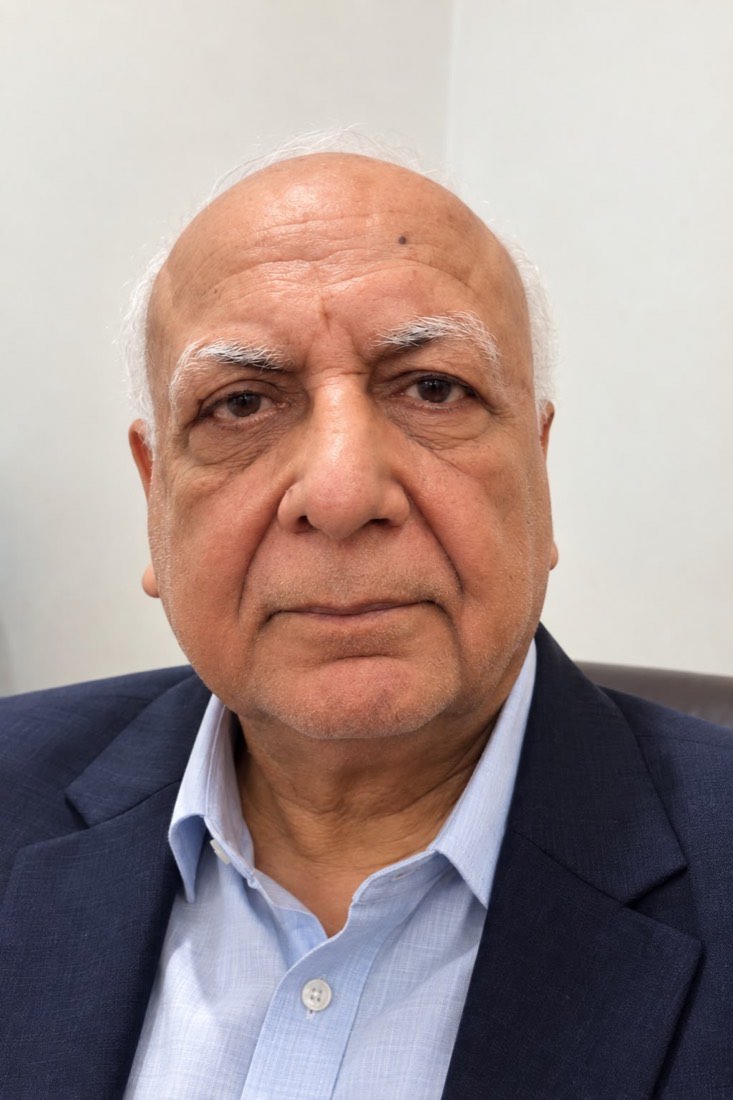
Krishan Kumar Arora, who founded Vastra Mahal in 1987
Krishan Kumar Arora

Krishan Kumar Arora & Bimla Devi

मेरे लिए बीस घंटे मेहनत थी, आने वाली पीढ़ियों के लिए नींव।

For me, twenty hours of toil; for generations to come, a foundation.

Before

Where it all began

Before Vastra Mahal existed, Krishan Kumar Arora and Bimla Devi were already part of the world of textiles. Working in the raw cloth trade gave them something more valuable than experience — it taught them how to recognise quality, understand fabric, and appreciate the craftsmanship behind a finished garment.

In 1987 they decided to turn that knowledge into something of their own. They began making uniforms. And Vastra Mahal was born.
1987

A partnership in every sense

It was never the work of one person. Bimla Devi built the product — working closely with tailors, supervising manufacturing, and paying attention to the details that decided how a garment looked, felt and lasted.

Krishan Kumar Arora built the market. He went out to meet customers and institutions, built relationships, and earned the trust that would gradually make the Vastra Mahal name known.

She looked after what left the workshop. He looked after the people it reached.

There were no shortcuts. Growth came one garment at a time. One customer at a time. One relationship at a time. And eventually, one generation at a time.

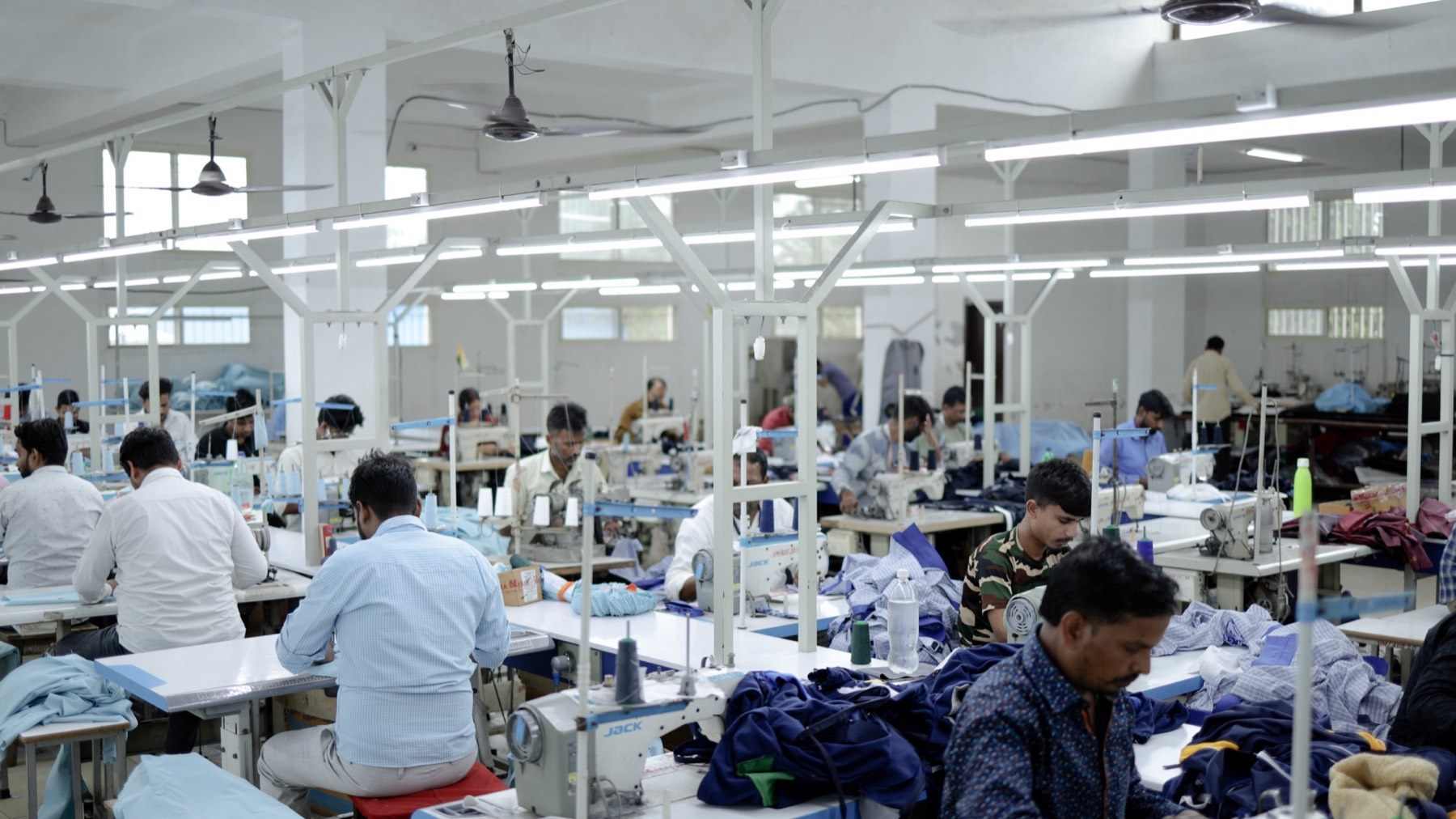
A row of operators working along the line
The line at work
II

The second generation

As Vastra Mahal grew, Akash Arora stepped into the business his parents had created. His responsibility was a different one: the foundation already existed. Now it had to be strengthened, organised and scaled.

Under his leadership Vastra Mahal began evolving from a traditional family-run uniform business into a structured retail and manufacturing organisation. Operations became larger. Systems became stronger. And a name built through personal relationships began reaching many more families and institutions.

By 2015 Vastra Mahal had grown to three retail showrooms. But retail was only one side of the vision. The real strength had always been the ability to make what it sold — so the next chapter belonged to manufacturing.

2018

A bigger home for manufacturing

In 2018 manufacturing moved to a dedicated facility in the C.B. Ganj Industrial Area, Bareilly. More space meant greater capacity. Greater capacity demanded better organisation. And better infrastructure opened the door to a much larger vision.

Vastra Mahal was no longer a uniform retailer that happened to produce its own garments. It was becoming a uniform manufacturing house.

2020

A test of what we were made of

Then the world changed. COVID-19 disrupted businesses, institutions and everyday life across the country. For Vastra Mahal it also raised a question: how could decades of garment-manufacturing experience be useful when it was needed most?

The floor adapted. Production expanded into PPE kits, surgical gowns and other healthcare garments, turning existing knowledge and infrastructure to an entirely new purpose.

It proved that our strength was never one product. It was the ability to manufacture, adapt and deliver.

2021

Building bigger after the pandemic

Manufacturing infrastructure expanded to roughly three times its earlier scale. Capability increased. Processes became more organised. The business began preparing not simply for more orders, but for a much larger future.

The workshop that had started with the founders’ hands-on approach was steadily becoming an industrial operation. The principle behind it did not move: make it well, deliver what you promise, protect the trust attached to your name.

2022

Taking the name further

In 2022 Vastra Mahal opened its first franchise store. For decades the family had learned how to manufacture uniforms, run stores and serve customers. The franchise model was a way of carrying that experience beyond company-operated locations — a small step towards a brand that could travel well past the boundaries where it began.

2024

The third generation

Nearly four decades after his grandparents started Vastra Mahal, Mann Arora joined the family business in 2024, after completing his Master’s degree.

He inherited something much larger than a company: the manufacturing experience of his grandmother, the relationships built by his grandfather, the organisation strengthened by his father — and the responsibility of deciding what the next version of Vastra Mahal could become.

With the third generation came a renewed focus on technology, branding, modern manufacturing, new markets and expansion. The objective was no longer to continue what previous generations had created. It was to build on it.

2026

Another new beginning

In 2026 Natasha Bhasin, Mann Arora’s wife, joined Vastra Mahal, bringing another perspective into the new generation of the business.

Vastra Mahal had spent decades building its strength in manufacturing and retail. The next phase asked for something more — stronger systems, sharper organisation, new ideas, and the ability to build a modern brand around an established manufacturing legacy. Natasha became part of that work.

Together, Mann Arora and Natasha Bhasin represent a chapter that respects everything the previous generations built while refusing to stand still. How can manufacturing become more efficient? How can technology improve the way the organisation operates? How can the Vastra Mahal name reach new institutions, industries and markets? How can a business built in Bareilly compete on a much larger stage? The answers to those questions are shaping what comes next.

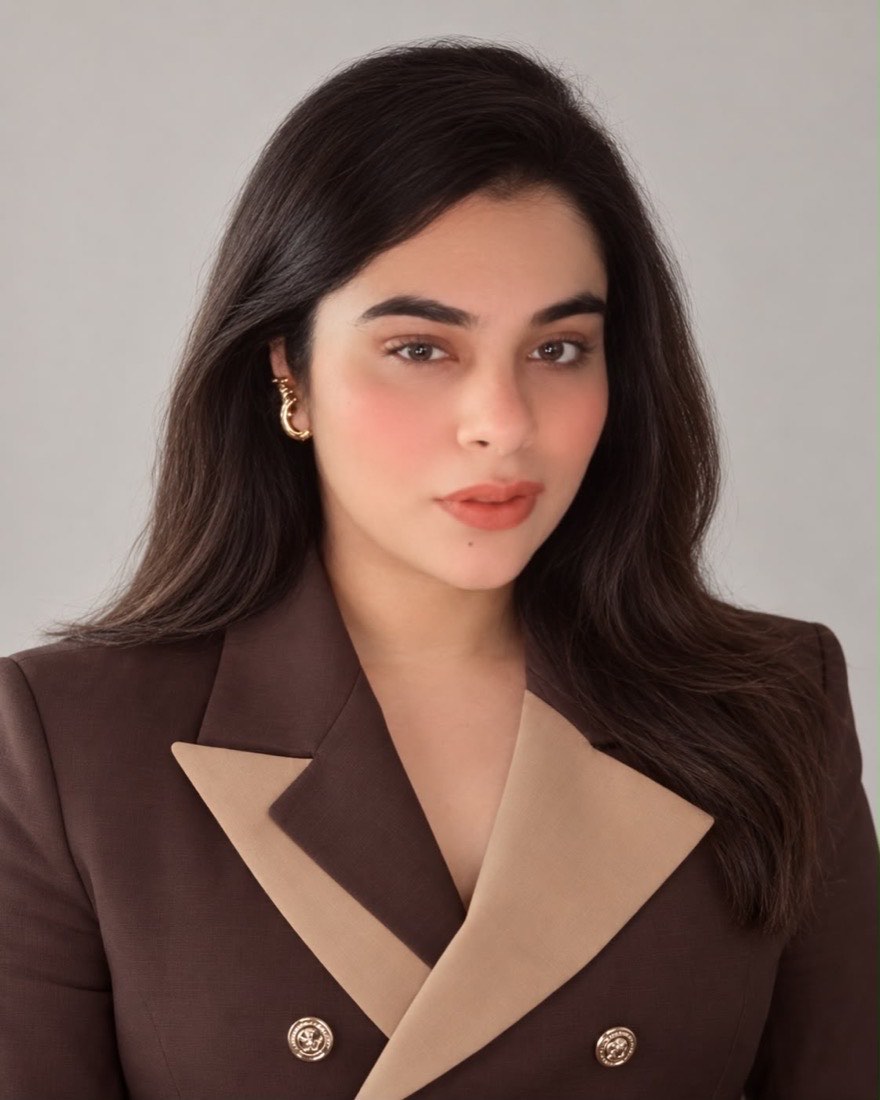
Natasha Bhasin, who joined Vastra Mahal in 2026
Natasha Bhasin

Three generations.
One legacy.

  1. 1987Vastra Mahal foundedKrishan Kumar Arora and Bimla Devi begin making uniforms in Bareilly.
  2. 2015Three showroomsRetail presence grows to three stores, serving students, families and institutions.
  3. 2018Manufacturing moves to C.B. GanjProduction shifts to a dedicated facility in the C.B. Ganj Industrial Area — the space and infrastructure to scale properly.
  4. 2020Healthcare manufacturingDuring COVID-19 the floor turns to PPE kits, surgical gowns and hospital garments. Proof the capability was never only uniforms.
  5. 2021Infrastructure trebledPost-pandemic, manufacturing capacity expands to roughly three times its earlier scale.
  6. 2022First franchise storeA retail model refined over decades extends beyond company-owned stores for the first time.
  7. 2024The third generationMann Arora joins the business, bringing a new-generation approach to growth, technology and branding.
  8. 2026A new generation takes shapeNatasha Bhasin joins Vastra Mahal, becoming part of the generation shaping its systems, its brand and its growth.
  9. TodayStill growingWhat began with two people and a belief in good craftsmanship carries on — the same name behind every garment.

From their hands to ours

Vastra Mahal has changed enormously since 1987.

  • Raw clothfinished garments
  • Two foundersthree generations
  • A modest operationmultiple retail locations
  • Traditional productiondedicated industrial manufacturing
  • School uniformshealthcare and institutional apparel
  • Company-operated storesa franchise model

Growth only matters when you remember where you started. For Vastra Mahal that beginning will always be Krishan Kumar Arora and Bimla Devi — two people with different responsibilities and one vision.

The second generation, led by Akash Arora, took that foundation and made it stronger. Today Mann Arora and Natasha Bhasin are stepping into the responsibility of carrying it forward. Different generations, different challenges, different opportunities — but the same name behind every garment, and the same belief that trust takes years to earn and moments to lose.

We have been stitching uniforms since 1987. What we have really been building is trust.

3

Generations

39

Years, unbroken